The power of the non-verbal
The content on this page was translated automatically.
Music therapist Karin Holzwarth enjoys the playfulness
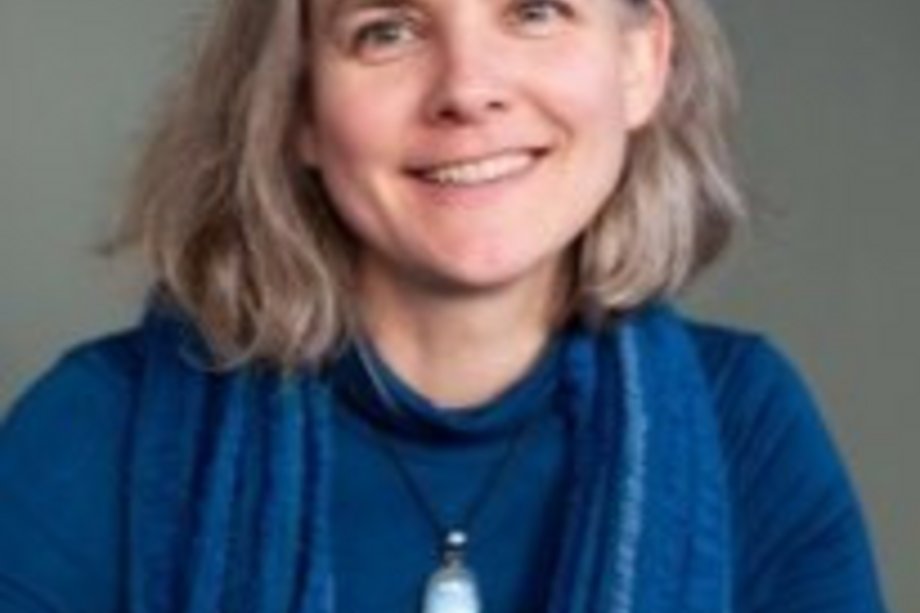
In October 2017, Karin Holzwarth was appointed Professor of Music Therapy at the HfMT - an institution she was not entirely unfamiliar with, as the Stuttgart native had studied music education with a major in rhythmics and music therapy here. Her studies were followed by various and numerous freelance activities as a music therapist, music teacher and musician. Since 2010, her professional work has also been characterized by a lively lecture activity, including at the HfMT, the University Medical Center Hamburg-Eppendorf (UKE) and nationwide at music therapy and music education conferences on the topics of music therapy and coma, music therapy in schools and music schools as well as music therapy and the social mission of inclusion. Karin Holzwarth has made her experiences public for scientific discourse in numerous publications in the specialist literature.
Rhythmics - when movements arise from within
The Ottensen-based therapist and teacher has fond memories of her studies at the HfMT. "My main subject in my first degree was rhythmics, so as students we were always colorful birds in the university world. I really enjoyed the playfulness of this course. We had the luxury of small study groups with plenty of room for exploration. I remember how we searched for movements in long sequences with our eyes closed, exploring the space, how the movements emerged of their own accord without our own intervention. My rhythmic studies focused on the body therapy method of eutony according to Gerda Alexander. Today, I think this direct experience of body knowledge has shaped me the most."
Music therapy - "reading" the body of the other person
Karin Holzwarth already knew she wanted to become a music therapist during her first degree. After graduating, she completed a private training course in Austria, known as Ancient Oriental Music Therapy / Ethnomusicotherapy. There she was taught the traditional Turkish makam system, which taught her to play a number of partly historical, classical Turkish instruments, including the knee violin rebab, the reed flute ney and the bent-neck lute ud.
As a young professional, Karin Holzwarth initially worked for seven years in a clinic for adults in psychosomatic and psychotherapeutic medicine. In the last 15 years of her professional practice, two main areas have emerged for her: "On the one hand, music therapy with comatose patients and in the palliative care/children's hospice sector, and on the other, music therapy in an educational setting with children and young people. Here I focus on the areas of inclusion, particularly in relation to social disadvantage, disability, cultural diversity and the experience of flight. These two fields of activity seem almost contradictory, and in many respects they are. What unites them, however, is the focus on the non-verbal, i.e. 'reading' the other person's body. This is where I find my first degree extremely helpful." Her still relatively new role as Professor of Music Therapy in Hamburg draws on her combined experience from decades of work in this and peripheral areas.
Hamburg - Whether it's a walk along the Schietwedder or a panoramic view of the harbor over a glass of wine at the Strandperle
What are your first impressions of teaching at the HfMT in terms of working with students and other departments?
"Within music therapy, we coordinate our seminars with each other in a lively exchange and accompany the students very personally on their path to a professional identity. Music therapy is such a multifaceted profession. I see it as a challenge to prepare students for the complexity of the tasks that await them, as well as the self-reflexivity, dynamism, communication skills and role flexibility required to master them. In addition to school music, we also maintain lively contact with the specialist groups for elementary music pedagogy (EMP) and instrumental pedagogy, and joint seminars are held, such as the No pills but skills course as part of the Musicians' Health program.
In her private life, the mother of two grown-up daughters enjoys improvising and long walks in all weathers. "What I love about Hamburg is the Elbe with its harbor cranes and container ships. I always enjoy looking at this panorama - over an evening glass of wine with my partner in the Strandperle. And regular visits to the sauna with my girlfriend are very important to me."
Event tip
On September 6 and 7, 2019, the symposium "ZUFLUCHTSORTE - KRIEG, FLUCHT, ANKOMMEN - Erfahrungen in Musiktherapie und Musikpädagogik", co-initiated by Prof. Karin Holzwarth, will take place at the HfMT.
TEXT DIETER HELLFEUER
PHOTO: KARIN HOLZWARTH CHRISTINA KÖRTE