Teaching degree for secondary level I and II as well as Q-Master
The content on this page was translated automatically.
The study program
By studying the sub-degree course "Music Teaching Qualification for Secondary Levels I and II (District Schools and Grammar Schools) (LA-Sek)", students acquire skills and knowledge that will enable them to teach music at secondary schools. This primarily includes artistic and practical artistic skills in two instruments, singing, practical school piano playing, music and movement/rhythm, choral conducting, orchestral conducting, arranging, practical school score playing and speech training. Theoretical and scientific knowledge is acquired in applied music theory, form theory, aural training, analysis and interpretation as well as historical and systematic musicology. Artistic and theoretical skills are combined with pedagogical knowledge in the seminars on school music-making practice and its didactics as well as music teaching and inclusion and tested in the practical field of schools. The above-mentioned course content takes into account the characteristics of Western art music as well as non-European music, jazz, folklore and various manifestations of popular music.
+++ New: From the winter semester 2025/26, the lateral entry Master's course for the advanced qualification for secondary school teaching (M.Ed.) in music can be studied at the HfMT Hamburg. +++
The postgraduate teaching qualification for secondary levels I and II in the subject of music is aimed at interested students who have completed an artistic, artistic-scientific or artistic-pedagogical degree in the field of music and would like to qualify to work as a music teacher at district schools and grammar schools.
The course leads to a Master of Education and provides access to the preparatory service, which concludes with the second state examination. Only with this degree is the full teaching qualification in music in Hamburg achieved.
The standard period of study is four semesters and includes subject-specific as well as didactic and educational science components. The course is designed as a cooperation between the HfMT Hamburg and the University of Hamburg: While the music teaching subject is studied at the HfMT, the educational science and didactics courses take place at the University of Hamburg. The program is supplemented by an orientation and core internship as well as the Master's thesis, which is written at the University of Hamburg.
At the HfMT, students deepen their music pedagogical skills and deal with current concepts of music education, musicology of music pedagogy and the institutional framework of school education.
After successfully completing the Master's degree, the preparatory service follows, which in Hamburg is organized as a two-subject preparatory service. Graduates without another teaching subject complete this in the subject of music and in the field of education. Only with the second state examination is the full teaching qualification achieved. While the equivalence of the degree is guaranteed in Hamburg, recognition in other federal states must be checked individually.
Teachers
The teaching staff at the Institute of School Music are drawn from a variety of disciplines. The list below includes part of the teaching staff.
* lecturer at HfMT according to §26 Hamburg Higher Education Act
Compulsory elective area
Within the compulsory elective area of all three teaching specializations, you can choose from the following courses, among others:
• Various project opportunities in the following degree programs:
• Stage Production (Musicals, Revues)
• Diversity Studies / Community Music
• Practical Music Education (piano, guitar, drums, accordion, saxophone, Orff instruments, brass instruments, string instruments,
• Body-Oriented Fundamentals; Movement, Rhythm, Dance
• Improvisation (piano improvisation, movement improvisation, vocal improvisation)
• Advanced study of various subjects based on availability
• Instrumental Pedagogy (subject-specific teaching methods, methodological practicum)
• Music Education Colloquium in cooperation with the Department of Teaching Methods at the University of Hamburg (UHH)
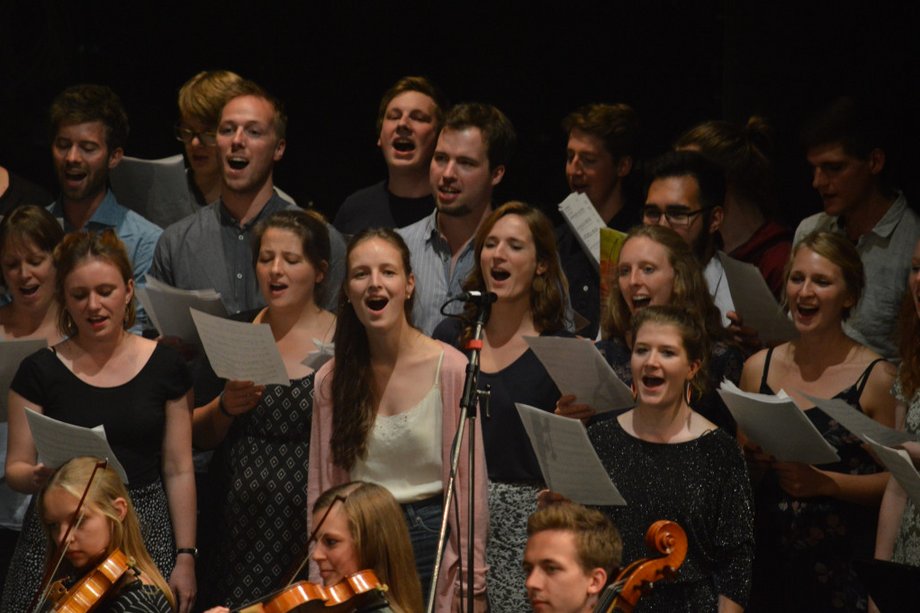
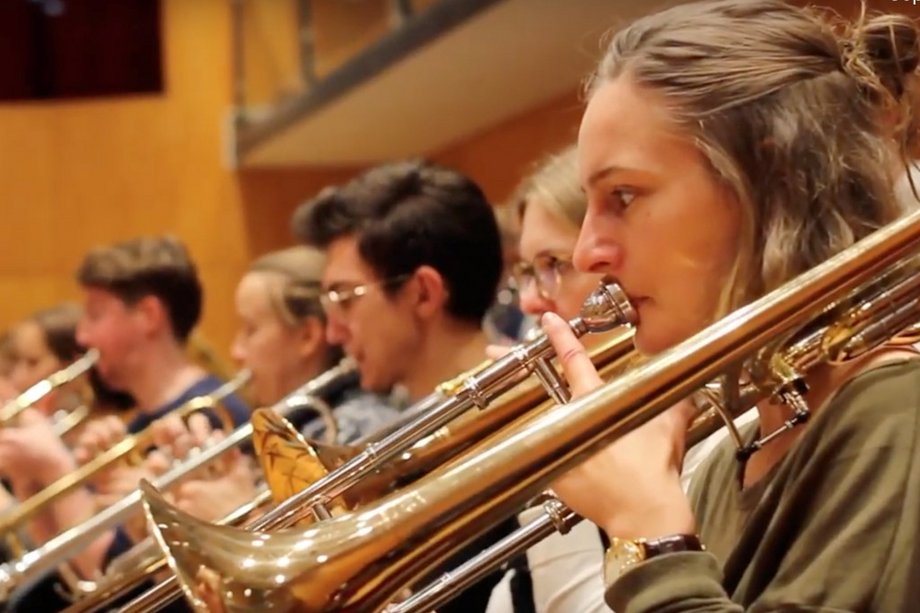
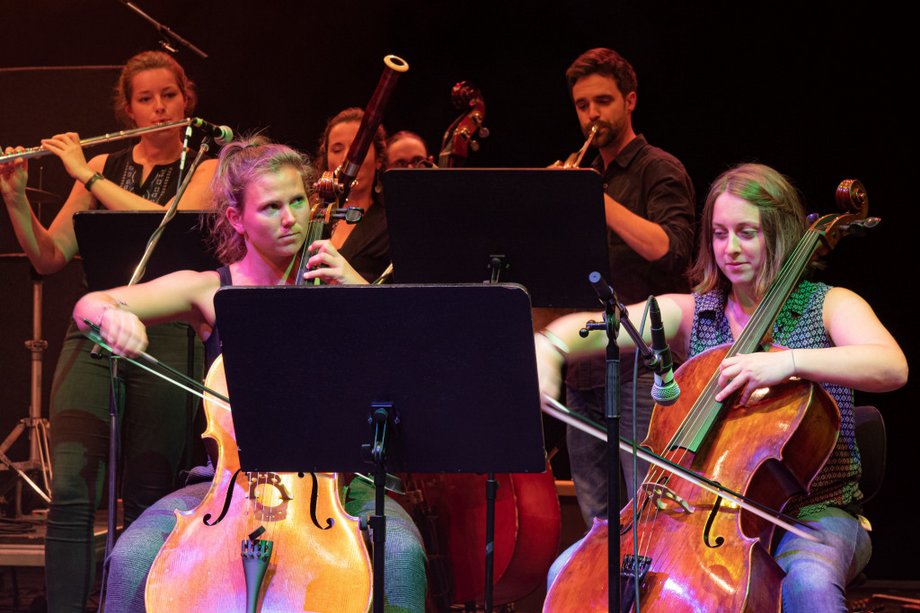
• Choirs/Ensembles (chamber choir, jazz choir, women's choir, men's choir, school music orchestra, school music big band, Kleinjans Ensemble)
• Advanced Study in (Choral) Conducting
• Improvisation as a Relational Process
• Group Dynamics (Group Dynamics in Music Education)
• Areas of Application in Music and Psychotherapy and Their Relevance to Music and Instrumental Instruction
• Basic Concepts of Psychodynamic Thinking for Music Education Practice
• Psychodynamic Movement (Body Awareness and Reflection)
• Conversational Skills for Music Educators
• Developmental Psychology with a Musical Perspective
• Emotions and Affects from a Psychodynamic Perspective
• Writing Seminar for the Bachelor’s Thesis on a Music Therapy-Related Topic
• Seminars and lectures in musicology
• Sight-reading, notation software, jazz theory, voice science
Entrance examination
In addition to the university entrance qualification (Abitur), the prerequisite for a Bachelor's degree course is passing the entrance examination as proof of artistic and academic aptitude.
New: From winter semester 2025/26, the instrument Saz/Bağlama can also be chosen as an artistic subject for the teaching degree. Further information in the online application.
Details on the specific requirements for the Master's and Q-Master's can be found here:
Information on the admission requirements for a Master's degree in School Music can be found in the admission regulations.
The application deadlines can be found in the overview of the application periods
All important information about the application can be found under online application.
Details of the requirements for the entrance examination can be found here.
Contact us
Ines Thiel
Fachbüro Lehramt/Schulmusik+49 40 209494226ines.thiel@hfmt.hamburg.de