DOES THAT GO TOGETHER? YES!
The content on this page was translated automatically.
Jazz harpist Milena Hoge uses new potential in lockdown
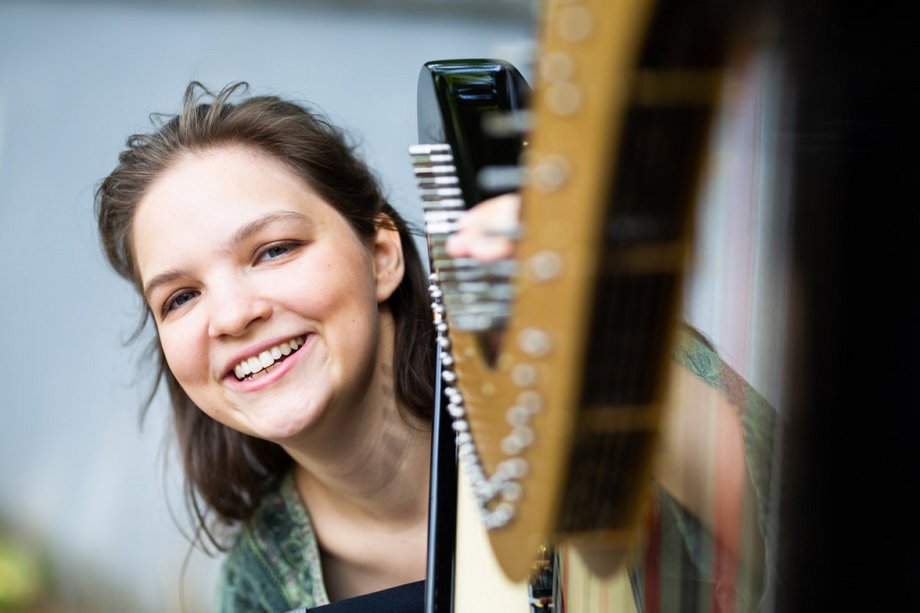
The combination of harp and jazz is likely to be a source of surprise for most people, as the multi-stringed instrument, in the truest sense of the word, is more associated with elegant classical music and ingratiating folklore. MILENA HOGE is a musician who proves that she can also use the harp to set accents in the improvisational and rhythmic realms of jazz music. Born in Hanover, she has been studying jazz at the HfMT with jazz pianist Burghardt Braune and harpist Isabel Moreton since the 2018/19 winter semester. She previously completed her Bachelor's degree in classical harp and instrumental pedagogy at the Detmold University of Music. Her bachelor's thesis at the time, with the tongue-in-cheek title 'Breaking out of the Harpbubble and playing with the big kids' - Harp, Jazz and Gender, was already dedicated to the harp in jazz. As an instrumentalist, she is active in various ensembles and world music projects.
Fruitfully turned on its head - and yet: longing for immediate presence
The interview with the now multiple award-winner took place at the beginning of July, at a time when the coronavirus was still omnipresent, but at the same time the first noticeable easing of the lockdown had come into force at the university. So the question arose as to how much the contact and performance bans had affected them in their studies.
Were there any ways to compensate or even new creative alternatives for making music and teaching? "The lockdown has really turned my everyday working life completely upside down. As I don't receive any student grants and earn my living from freelance work as a harpist and a job as a student assistant at the HfMT, this crisis has not left me financially untouched. On the other hand, I am very grateful that I had the opportunity to take a step back during the lockdown and refocus on the central aspects of my work. This time has triggered an intensive examination of the possibilities of locating my musical work in a wider cultural, social and political context, which I hope will bear fruit in the future. At the same time, however, I really miss playing together regularly in ensembles and projects and the immediate presence and energy of an audience."
That sounds a bit like the famous "crisis as an opportunity". Are there examples of positive side effects of the lockdown? "Yes, there are. The time saved by working online and from home is not to be sneezed at and allows for a pleasantly efficient structuring of everyday working life. I've been able to learn a lot of new things this semester and I'm sure that using the appropriate programs and strategies to learn and work digitally will continue to be relevant in the future. Teaching via Zoom has proven to be a very viable alternative. The increasing spread of digital offerings has also enabled me to network and exchange ideas better and more easily internationally."
"These experiences are worth their weight in gold." - Even more potential for productive networking
A look back to pre-corona times: What were the reasons for studying at the HfMT?
"During my classical bachelor's degree in Detmold, I found out about the jazz courses at various universities and got in touch to pave my way into jazz with the harp. Through my circle of friends, I had already heard about the willingness to experiment, the frequent cross-genre projects and the long tradition of the Hamburg jazz course. After a first lesson with Burghardt Braune on jazz piano, Hamburg quickly became my favorite."
How did you perceive your studies at the HfMT during these first two years?
"The HfMT made it easy for me to settle into everyday university life and feel welcome. On the jazz course, we students receive individual support and an inspiring exchange. The HfMT offers a wide range of lectures and seminars with the opportunity for interdisciplinary exchange and collaboration. I have the impression that this potential for productive networking of different musical fields, science, theater and pedagogy could sometimes be even more fully exploited and emphasized. All these experiences are worth their weight in gold for us students on our path to professionalism, a strong, authentic musical personality and comprehensive musical education."
Postponed is not canceled - hope for events and ensemble rehearsals
Back to the topic of corona, which unfortunately still dominates everything: is there the proverbial light at the end of the tunnel? "Yes and no. In any case, I can see that we would only be harming ourselves if we rushed things now and pretended we were back to normality. Of course, I'm very happy that it's possible to use the HfMT premises again for practicing and for individual lessons. In my experience, instrumental lessons at university level in particular cannot currently be replaced by digital lessons in any satisfactory way, let alone ensemble lessons. With regard to working and learning together in ensembles and bands, I very much hope that ways can be found to make rehearsals possible again. We have felt the effects of the crisis in this area in particular. And the events that have been "postponed" this year will hopefully be the new, appropriately adapted events for next year. If we could catch up on as many of them as possible this fall, that would of course be great."
Detailed information on Milena Hoge's artistic and educational work and current projects can be found on her website https://milena-hoge-harp.com
TEXT DIETER HELLFEUER
PHOTO: MILENA HOGE CHRISTINA KÖRTE