The Magic Mountain
The content on this page was translated automatically.
Languages: German, English
Hans Castorp travels to the mountains to visit his cousin at a sanatorium. He plans to stay for three weeks. Somehow, that turns into seven years.
Up there, time follows its own rules and flows freely. The days are carefully structured by routines. Time and again, the same people gather at the same table. They eat, observe one another, talk, wait. Almost nothing happens, and yet, at the same time, entire lives unfold in gestures, encounters, and minute details: an attraction, an argument, a shifting conviction; someone arrives, someone is suddenly gone.
In her contemporary exploration of Thomas Mann’s novel, Kapitolina Tsvetkova conceives of the mountain less as a place than as a particular state of being. A cultured society remains safely above the world, discussing its crises with intelligence, while at the same time becoming increasingly incapable of action. The more closely it observes and analyzes, the more the act of observation itself threatens to become a form of paralysis. And where does the line between observing and being observed lie? The play culminates in a harpsichord concerto in which time seems to become fluid and our relationship to death oscillates between attraction, fear, and acceptance. The music thus becomes a possible sublimation of the inevitable.
Time expands and contracts; the everyday takes on a strange intensity. Food, smell, temperature, sound, closeness, and the presence of other bodies are just as important as words. Death is discussed. Yet it is hardly tragic: it can become erotic, ridiculous, fascinating, frightening, intimate, and sometimes almost mundane.
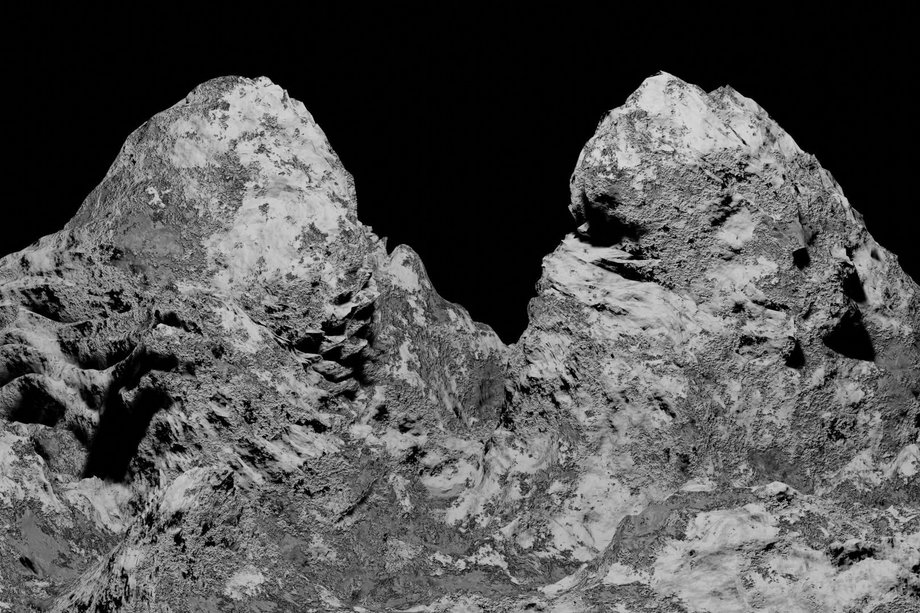
The mountain itself constantly shifts its distance from us. The shifting video landscape by Carmen Kleykens Vidal and the lighting by Luciano Correa Barraza accompany a world in which duration, memory, and the boundary between closeness and distance become increasingly uncertain.
In 2026, Thomas Mann’s work entered the public domain in Europe. We are taking this moment as an opportunity to re-release this masterpiece into the present.
Cast
; Director KAPITOLINA TSVETKOVA
; Video Design CARMEN KLEYKENS VIDAL
; Lighting Design LUCIANO CORREA BARRAZA
; Creative Coding ALEXANDER ILIASHENKO
; Ensemble: STUDENTS OF THE HfMT HAMBURG
; Production Manager NORA EBNETH
; Project Coordination ligeti Center BENJAMIN HELMER
Sound KATHARINA RASPE, GIOVANNI DINELLO
Lighting BIRGER VON LEESEN, GERALD TIMMANN
Technical Director, Forum OLIVER KIRSCHNER
Eintritt: 12,00 EUR
Ermäßigt: 6,00 EUR
HfMT-Studierende: frei
Ticket prices include the advance-sale fee. Discounts are available for K-12 students, college students, and those eligible under the Social Code (SGB).
Tickets are available at eventim.
Our box office opens one hour before the event begins.
Note
: Photos and videos will be taken during the event and may be published afterward. If you do not consent to this, please contact our team.
A collaboration with the ligeti zentrum. Supported and funded by the ligeti zentrum and the Hamburg University of Music and Drama.
The ligeti zentrum is funded by the Federal Ministry of Education and Research and the City of Hamburg as part of the federal-state initiative “Innovative University.”
Funded by the rehearsal space grant program of the Dachverband freie darstellende Künste Hamburg e. V. (DfdK).
Event Overview
October 18, 2026, 7:00 p.m.
October 19, 2026, 7:00 p.m.