Triad by Jan Meyer Rogge
The content on this page was translated automatically.
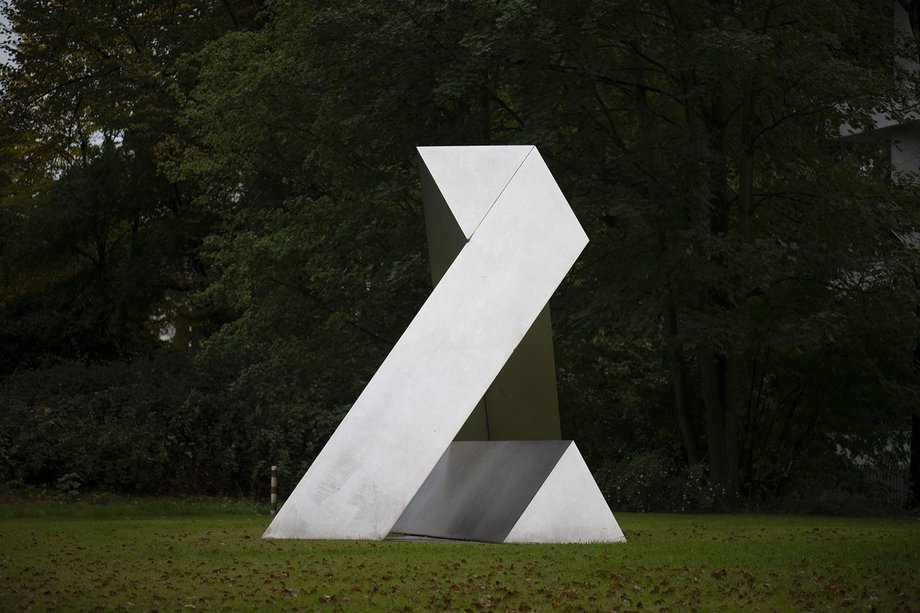
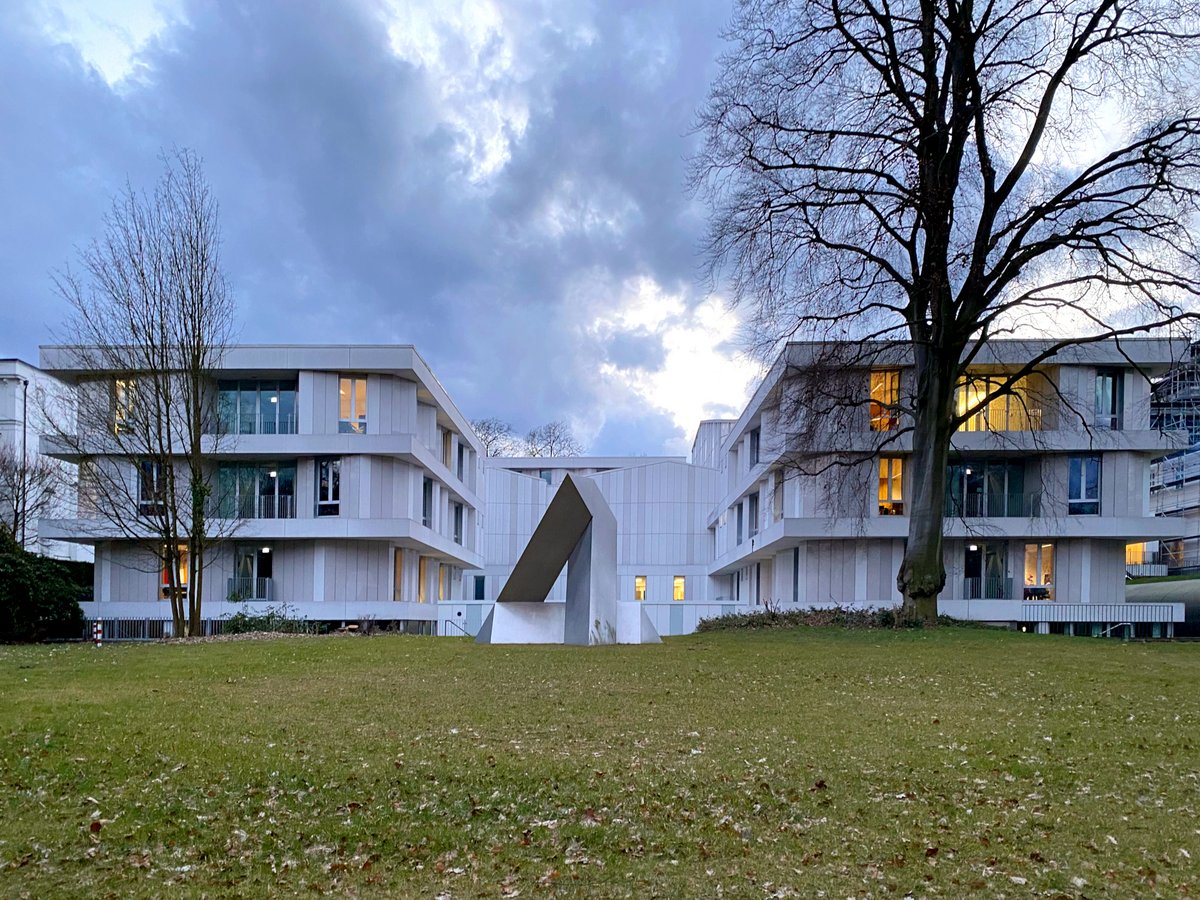
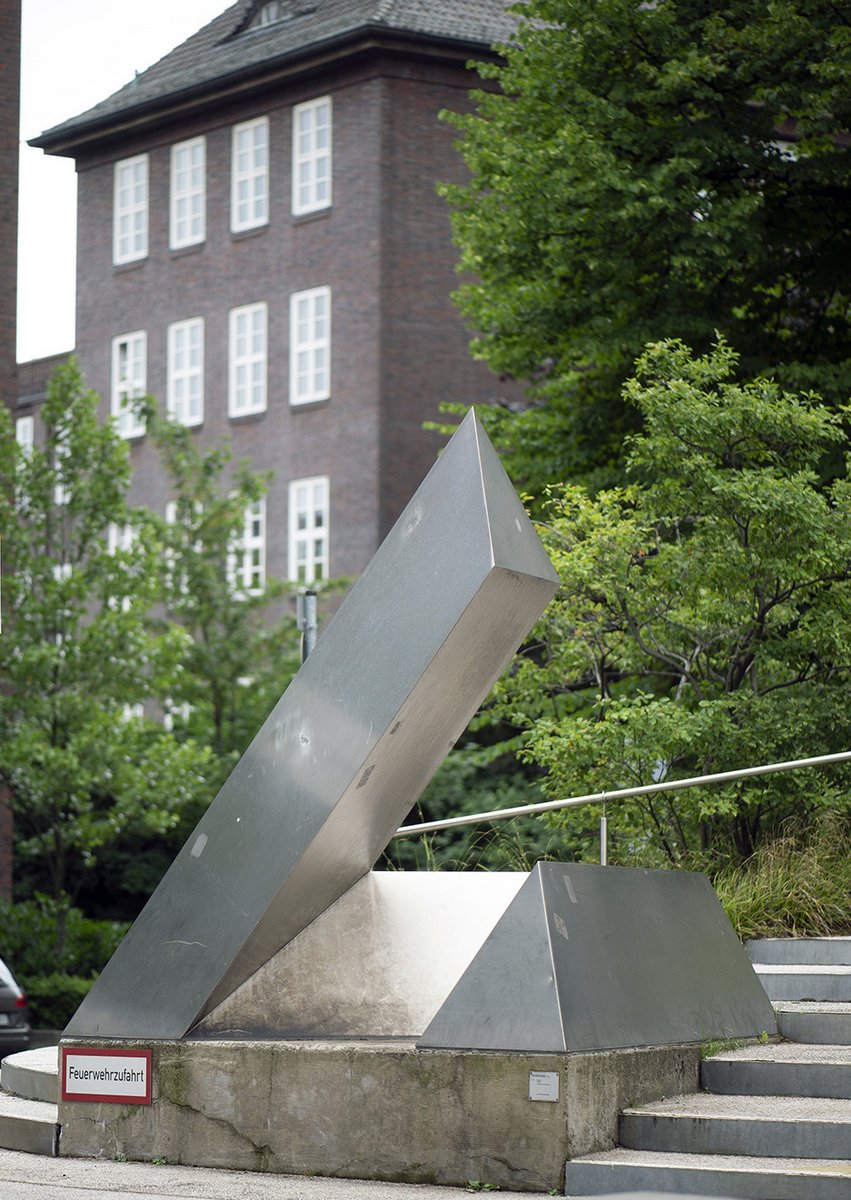
Since 1975, Jan Meyer-Rogge’s sculpture *Dreiklang* has stood in the heart of the lush campus of the Hamburg University of Music and Drama—like a silent chord amidst nature. It is visible to both passersby on Harvestehuder Weg and students of the university. Its size, material, and form give it a striking presence in public space.
When the sculpture was installed, the Hall of Mirrors was still in its old location next to the Budge Palace, and the excavation for the Forum was just getting underway.
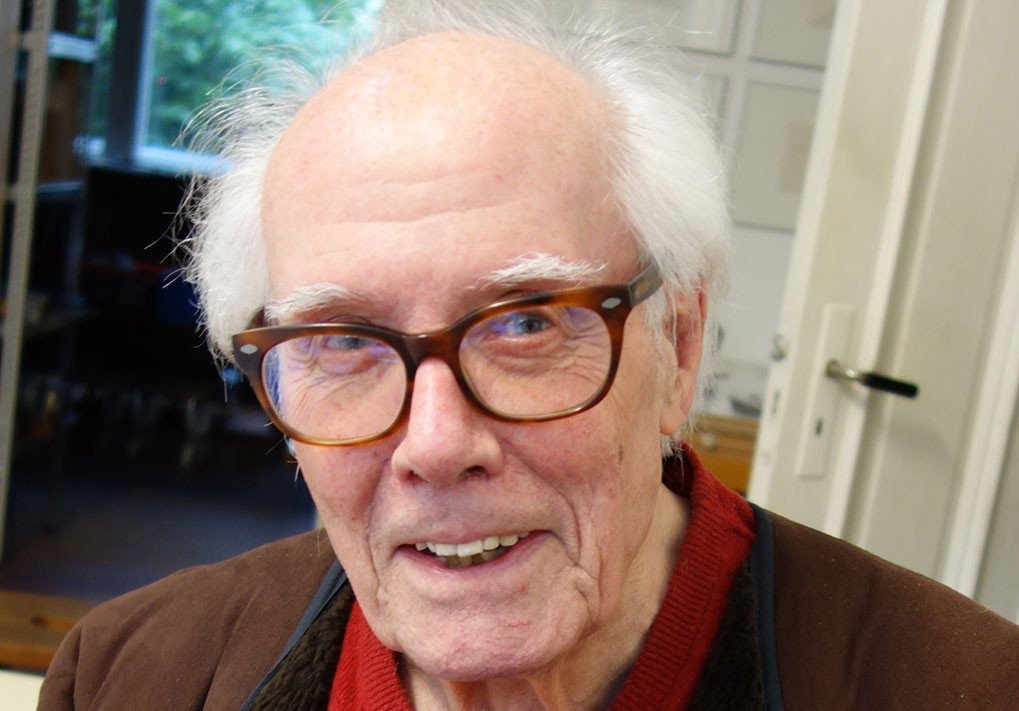
Jan Meyer-Rogge, born in Hamburg in 1935, first studied painting at the Academy of Fine Arts under Karl Kluth before turning his attention entirely to sculpture beginning in 1965. Early on, his works revealed a keen sense of the balance of forces and of the stillness within the tension between the constructed and the natural.
This approach is also evident in *Dreiklang*: The seemingly simple form—a prismatic steel band folded in on itself—does not simply stand “in” the space, but makes the space resonate. The solid surfaces, joined with geometric precision, seem to support one another while simultaneously being in conflict—a compositional feat of strength that nevertheless captivates with its lightness.
Competition
The steel sculpture is the result of a closed competition organized by the Eimsbüttel District Office. In addition to Meyer-Rogge, two other artists were invited: Prof. Almir Mavignier, Werner Reichhold, and Hans-Joachim Frielinghaus. The jury included representatives from the district administration, the building department, and Hajo Hinrichs, then president of the university.
In his proposal presented to the jury, Meyer-Rogge outlined two alternatives based on the same concept but made of different materials.
The concept indicates that, during preliminary discussions with the university, the desire was expressed to be able to use a drawing of the sculpture as the university’s logo as well.
The absent artist Frielinghaus proposed a six-meter-high column made of chrome-nickel steel. The design was based on a cube that was repeated continuously through rotation.
Almir Mavignier intended to further develop his sculpture based on the Hachmannplatz design. In his presentation, Werner Reichhold focused on oscillation as a central spatial design element. His design was intended to be closely integrated with the building structure and reach a height of five meters.
Following deliberations, the committee selected Jan Meyer-Rogge’s design. The originally planned budget of 43,000 DM had to be reduced to 33,000 DM due to a lack of donations.
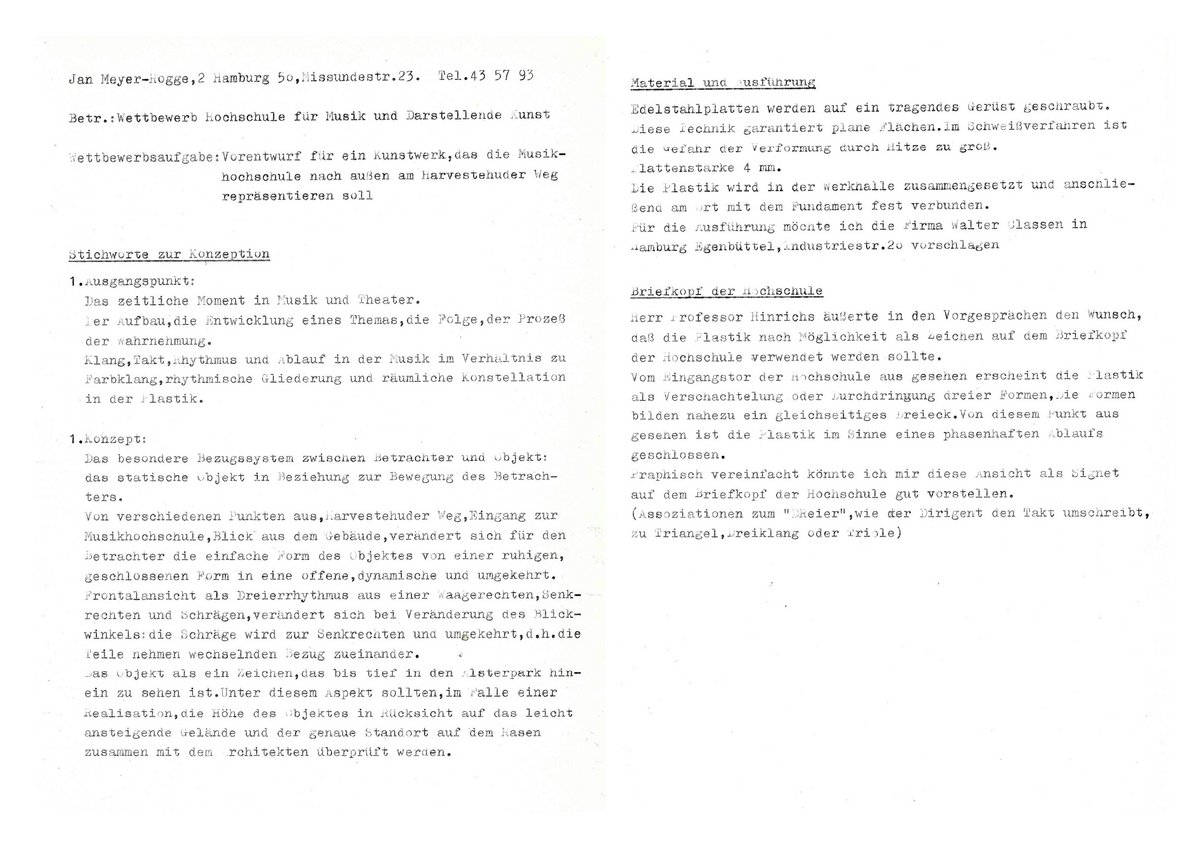
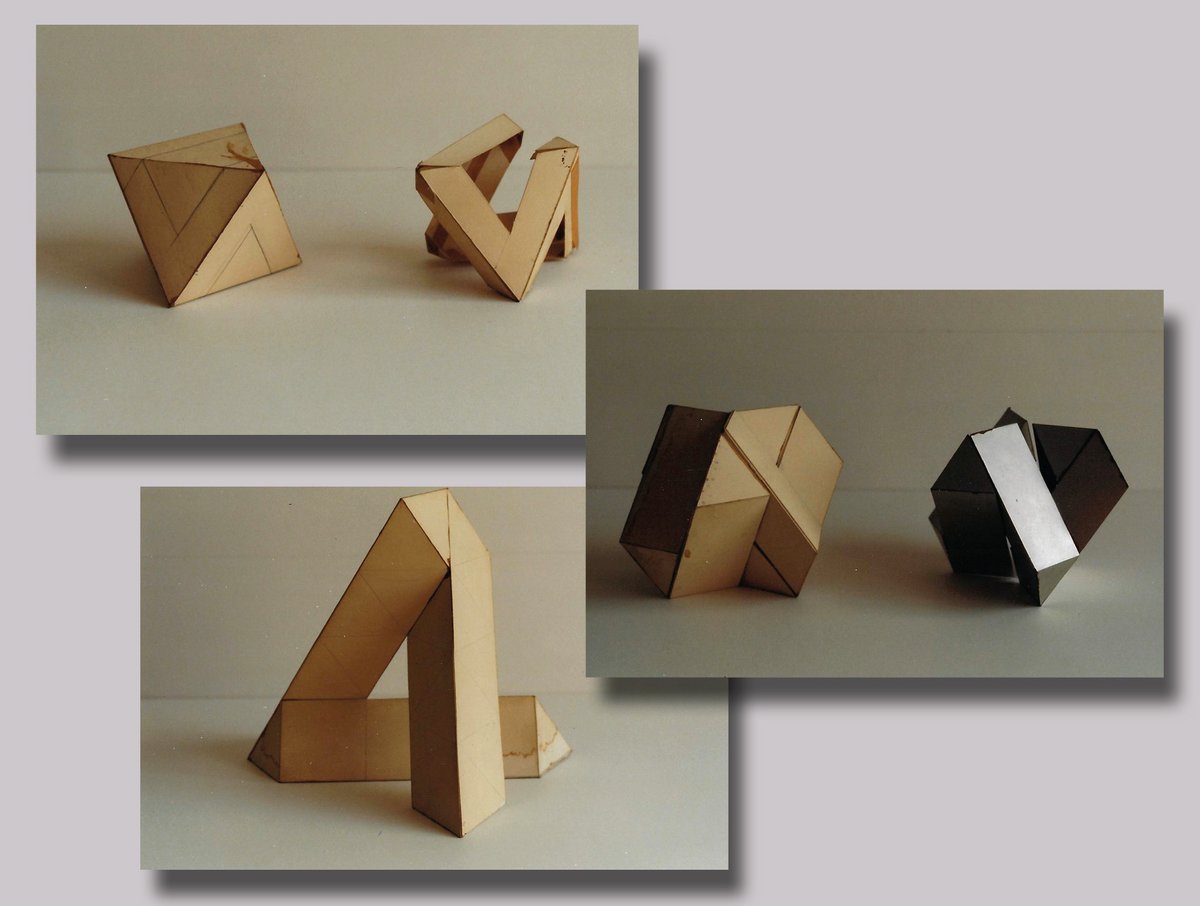
The Draft
Contract Award
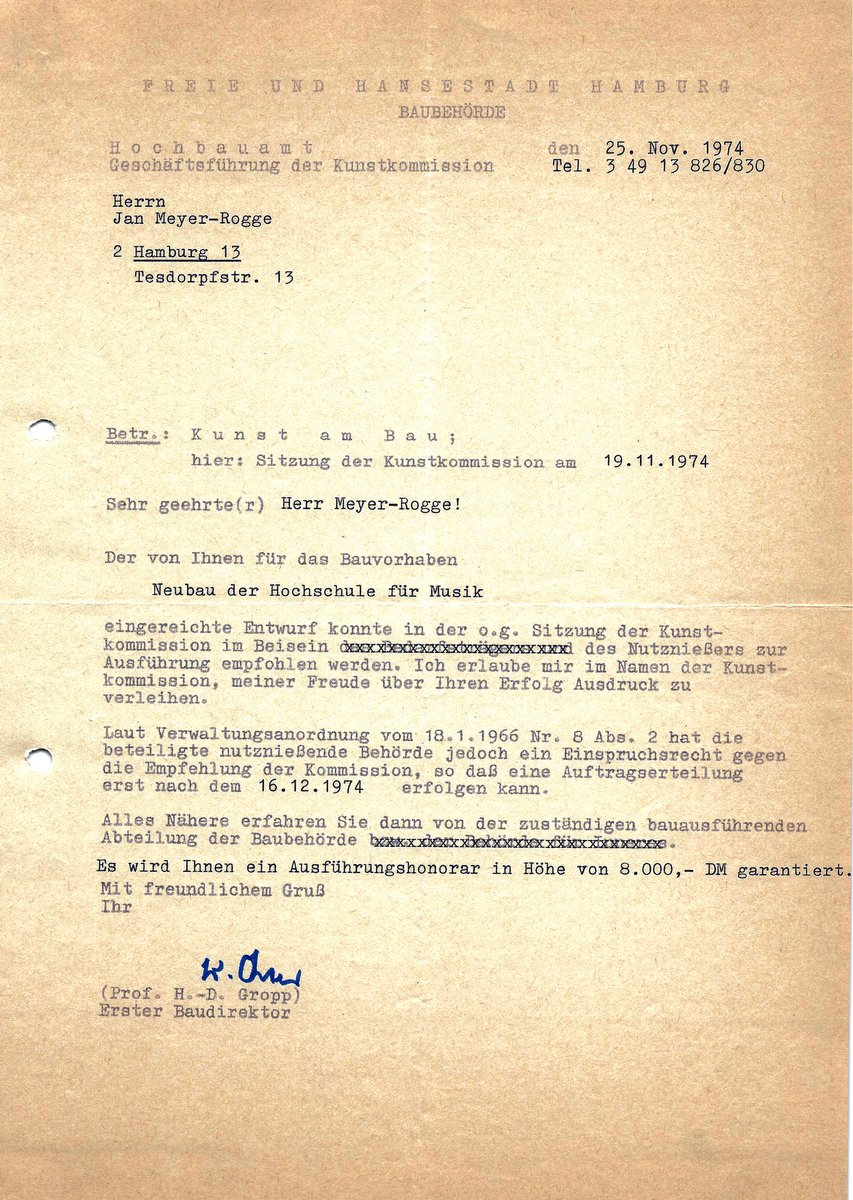
Meyer-Rogge, 38, was awarded the commission; further discussions followed with Director Hajo Hinrichs and architect Fritz Trautwein.
The initial design was submitted on June 19, 1974, and the final version was submitted to the building authority on November 19 of the same year. In January 1975, the artist was awarded the contract to create the sculpture.
Structure
On September 25, 1975, the time had finally come. The “Dreiklang” was installed in the college’s garden.
In the background, you can see the back wall of the former Hall of Mirrors before it was demolished as part of the next phase of construction—the building of the Forum and the organ studio—and later rebuilt at the Museum of Arts and Crafts.
other works
Also in 1975, he adopted the design principle of the “triad.” The sculpture TETRAEDER stands in front of the University of Applied Sciences at Berliner Tor.
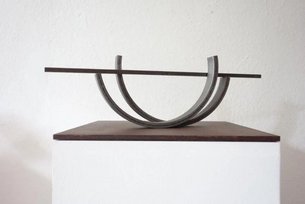
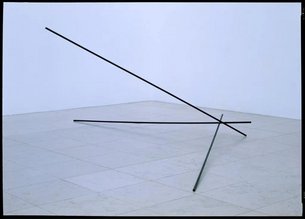
Meyer-Rogge never merely constructed pure forms; rather, he always created “inventions.” His works are not mere sculptures, but acts of insight: they give tangible form to the questions of balance, visibility, order, and instability.
Interview
In the spring of 2025, Jan Meyer-Rogge kindly agreed to an interview and discussed the creation of this sculpture.
The interview was conducted by Prof. Frank Böhme.