Dr. Langner Jazzmaster
The content on this page was translated automatically.
The study program
Your music. Your ideas. Your own path.
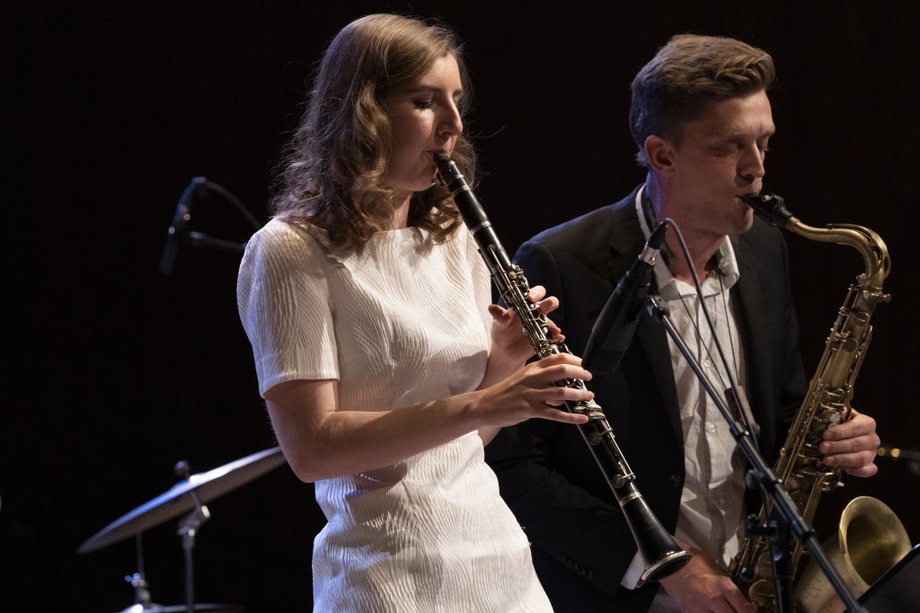
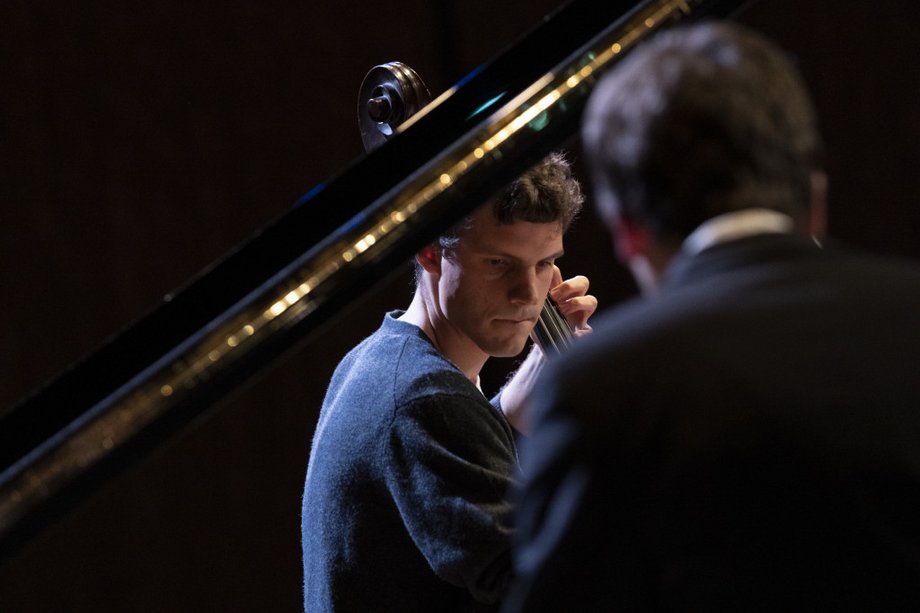
Develop your artistic vision and bring it to life: In the Dr. Langner Jazz Master’s program at the HfMT Hamburg, you’ll shape your own academic path with an extraordinary amount of freedom. Over the course of two years, you’ll explore new approaches to your instrument, further develop your own music, and bring your ideas to the stage. You’ll choose your instructors from around the world, set your own priorities, and bring your projects to life.
The Program at a Glance
Degree: Master of Music
Standard duration of study: 4 semesters / 2 years
Credit hours:120 ECTS
Languages of instruction: German and English – the program can be completed entirely in English
Start date: October 1 of each year
Application period: February 15 – April 1
A degree program that fits your goals
Your artistic ideas set the direction. Three areas of study combine instrumental training, an additional area of focus, and room for new perspectives.
Your instrument. Your music. Free choice of instructors—worldwide.
The Core Program
Collaborate with the musicians who inspire you. You can choose your instructors from the experienced team at HfMT Hamburg as well as from the international jazz scene. This allows you to bring the skills and inspiration into your studies that align with your music and your goals.
Throughout all four semesters, you’ll receive 90 minutes of one-on-one instruction per lecture week. You can divide this time between two instructors: to gain different perspectives on your primary instrument or to incorporate a second instrument.
Your band. Your music. Your stage.
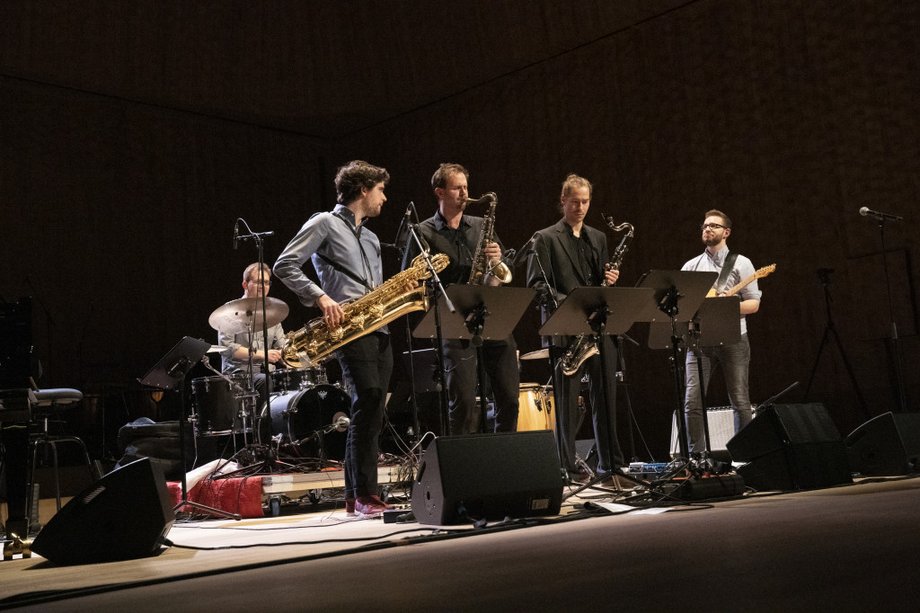
Your own Jazzmaster ensemble is where you test and develop your musical ideas together with others. An ensemble coach of your choice will support you in this process. Starting in the second semester, you’ll have 30 minutes of coaching per lecture week available for this purpose. You can also use this allocation in longer blocks of time by arrangement.
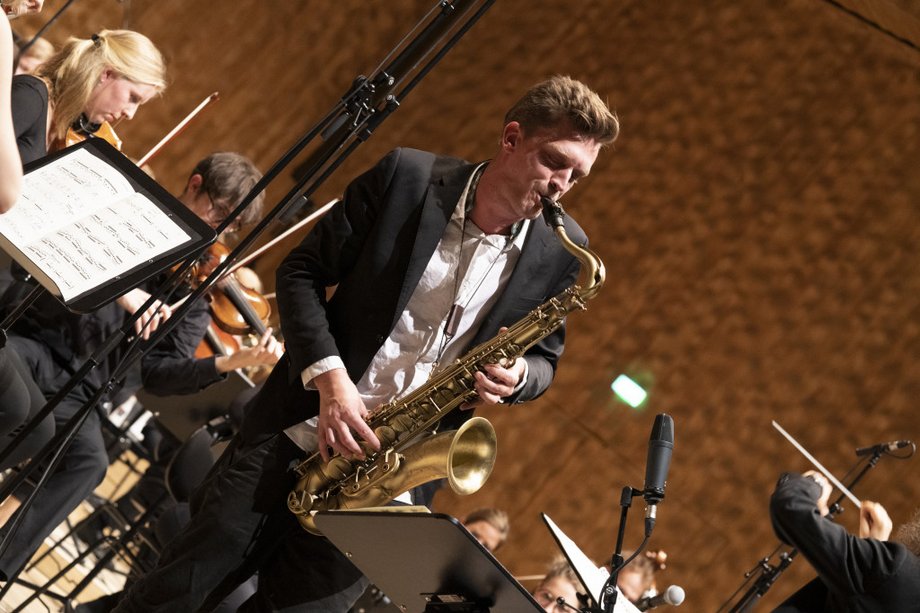
Concerts are an integral part of the program. The JazzHall, our concert hall on campus, provides you with a stage to present your projects to an audience. Hamburg’s diverse music scene invites you to make new connections and explore the scene for yourself.
Your Guest of Choice: Artist-in-Residence Project “
” Who would you like to collaborate with musically? In theArtist-in-Residence project, you invite a musical guest of your choice and create a joint project with your ensemble. You’ll work on your music, develop new ideas, and bring the result to the stage.
From the initial idea to the concert, the project is in your hands. An accompanying seminar will equip you with the tools for planning, organizing, budgeting, and fundraising. This way, you’ll learn project management directly through your own project and gain experience for future endeavors.
More Room for Your Artistic Profile
The Specialization Track
With a Focus Area, you’ll deepen your interests or explore a new field of work. You can choose from Composition, Improvisation, Business, Performance and Theater Music, Pedagogy, Classical Music, Pop Music, and Production.
During the first through third semesters, you’ll receive an additional 60 minutes of one-on-one instruction per lecture week with a faculty member of your choice. Relevant seminars complement your focus area. You’ll bring your ideas to life in your own final project.
Your path to a professional career is also part of the program: In Band Leadership, Stage Performance, Artist Image Development, and Online Marketing, you’ll gain practical insights to enhance your band work, stage presence, and the visibility of your music.
Discover New Perspectives
Elective Courses
What else would you like to try? Take advantage of additional ensembles, seminars, and interdisciplinary offerings at the university to gain new inspiration and meet artists from other disciplines.
Discover our Focus Areas:
In the Composition Focus Area, you’ll work on your own pieces and arrangements. You can write for your band, explore larger ensembles, or pursue a compositional idea for which you’ve lacked the time and guidance until now.
with Individual Guidance Over the course of three semesters, you’ll receive one-on-one instruction from a faculty member of your choice. Together, you’ll discuss what you’d like to work on and what technical skills you’ll need to achieve your goals. Courses such as conducting or style-specific composition can complement your lessons.
Your Project
To conclude the program, you’ll bring your music to the stage with an ensemble. Therefore, the work also involves rehearsing your compositions with the musicians and bringing them to life. You’ll develop the ensemble and program to suit your project. The composition project concludes the specialization at the end of the third semester.
For your application
Submit your own compositions, supplemented, if applicable, by scores of arrangements and recordings of your compositions or arrangements. This will give us insight into your work to date.
Here, the focus is on free improvisation. You’ll work on music that emerges in the moment and on forms that combine composition and improvisation. In doing so, you’ll consciously move beyond familiar jazz forms.
:Individual Guidance Over the course of three semesters, in one-on-one lessons with a faculty member of your choice, you’ll delve deeper into the approaches that interest you. Seminars and ensembles offer opportunities to explore these approaches through ensemble playing. Together, you’ll reflect on what emerges musically and the decisions you make while improvising.
Your Project
In the third semester, you’ll present your own concert project. This can be a freely improvised performance or a program in which composed and improvised passages complement each other. The form will emerge from your work in your area of focus.
For your application to “
,” submit audio or video recordings that showcase your work with free improvisation. Additionally, you may describe the musical approaches and questions you wish to explore further during your studies.
The Classical Focus Area offers you the opportunity to deepen your classical instrumental practice alongside your jazz studies. You’ll work on a selected repertoire and explore the technical and interpretive challenges that arise from it.
with Individual Guidance Over the course of three semesters, you’ll receive classical instrumental instruction. Together with your instructor, you’ll select works and determine what you’d like to focus on. Relevant seminars and ensemble opportunities—such as those in early or contemporary music—can complement your lessons.
Your Project
In the third semester, you’ll present a classical concert program that you’ve put together yourself. The selection of works will be based on the areas of focus you’ve developed during your lessons.
Application Requirements Submit a video recording of a classical performance that provides insight into your instrumental and interpretive skills to date.
In the Focus Area Pop, the HfMT’s Pop Course becomes part of your master’s program. You’ll collaborate with other musicians and use the ideas and connections you make there for your own pop project.
with Individual Support In the first and second semesters, you’ll take the Pop Course. In the third semester, you’ll continue working on your band or pop project with a faculty member of your choice. You can also take advantage of recording studio facilities.
Your Project
You’ll develop your own program with your band or ensemble. In the final concert of the third semester, you’ll present the results of your collaborative work and your musical ideas.
Application: Submit song samples and a recording of a live performance that showcase your musical work in the pop genre.
Music for the theater is created through collaboration with a production and the people working on it. In the Focus Area Theater Music, you’ll explore this collaboration and develop music for theatrical projects.
:Individual Guidance You’ll receive one-on-one instruction from a faculty member of your choice in the field of theater music. Through collaboration with the Theater Academy at the HfMT, you’ll gain insight into rehearsal processes and working methods in the theater. Seminars—such as those on project development or collaborative work—complement the practical work.
Your Project
You will compose the music for a theatrical production. In collaboration with the participants, you will continue to develop the music throughout the creative and rehearsal process. Finally, you will present your theatrical music as part of the production.
For your application
Submit references or samples of your work that demonstrate your previous experience with theater music—for example, documentation of productions, project descriptions, or engagement contracts.
What sound do you want your music to have—and how do you achieve that in a production? In this track, you’ll focus on the musical and technical aspects of working on your own recordings or live projects.
:Individual Guidance You’ll receive one-on-one instruction from a teacher of your choice. You’ll tailor the content based on your existing experience and what you’d like to learn for your project. In addition, there’s the Recording Studio seminar. Courses on mixing and the topic “AI Tools: Between Cliché Machine and Source of Inspiration” are in the works.
Your Project
Over the course of three semesters, you’ll work toward your own music production or a live project. You’ll make the musical and technical decisions and see your project through to the finished production or performance.
Application Submit examples of music you’ve produced yourself or other original audio productions that provide insight into your previous experience.
In addition to an artistic vision, a music project also requires organization. In the Focus Area Business, you’ll explore how cultural projects are planned and implemented, and gain insight into the cultural sector from a management perspective.
:Individualized Support To this end, you’ll collaborate with the Institute for Culture and Media Management at the HfMT. You’ll attend selected courses and participate in projects with students in the KMM master’s program. You’ll work with your academic advisor to determine which offerings best align with your interests.
Your Project
You’ll develop and implement your own cultural or music project. In doing so, you’ll tackle the specific tasks involved in your project—from planning to collaborating with all stakeholders. Afterward, you’ll reflect on the process and the results.
How can music be taught in a way that allows others to find their own connection to it? In the Focus Area on Pedagogy, you’ll develop teaching and outreach ideas and test them in practice. You can build on your previous teaching experience or explore new target audiences and formats.
with Individual Support Together with a faculty advisor, you’ll determine which pedagogical questions you’d like to explore in depth. Additional specialized faculty members may be involved for specific projects. You’ll discuss appropriate methods and the requirements of each learning situation.
Your Project
During the first three semesters, you’ll plan and test educational projects, such as workshops, one-on-one instruction, or group activities. You’ll document the process and reflect on your experiences. Finally, you’ll write a paper on a topic you’ve explored in depth during your educational practice.
For your application to the “
” program, give us insight into your previous educational experiences—for example, through lesson or workshop plans, project descriptions, or proof of your activities. Also describe which aspects of music education you’d like to explore in greater depth during your studies.
Academic Planning and Insights
Your ideas become your study plan
Together, we’ll translate your artistic aspirations into concrete academic goals. In your Learning Agreement, we’ll outline which faculty members, courses, and projects you’d like to use to pursue these goals. The accompanying mentoring program will help you make the most of your academic experience and plan your course of study.
More music. More insights.
Discover concerts, student projects, and insights into the Jazz Master program on YouTube and Instagram.
→ Discover concerts and videos on YouTube
→ Follow the Jazz Department on Instagram
Faculty
Musical Inspiration from Our Team and Network
The jazz program at the HfMT Hamburg brings together experienced educators and freelance musicians—including many members of the NDR Big Band. They bring a wide range of artistic perspectives and experience from concert performance and teaching to your studies.
Thanks to the flexible choice of instructors, you can also collaborate with artists from around the world. The following overview introduces you to some of the additional instructors involved as well as our mentors. It showcases a selection of our network—your options extend far beyond what’s listed here.
Additional teachers
In addition to the team of lecturers in the jazz department of the HfMT Hamburg, further lecturers can be recruited for teaching in the Dr. Langner Jazzmaster. In the following overview you will find an excerpt of the current additional lecturers in the Jazzmaster who complement the HfMT lecturer team. You will also find the two mentors of the Dr. Langner Jazzmaster program in the overview.
* lecturer at HfMT according to §26 Hamburg Higher Education Act
Entrance examination
You can apply to begin your studies in the winter semester from February 15 through April 1. As part of your online application, you’ll submit demo recordings and other documents for the first round of selection. After successfully passing the preliminary selection, the next step is the admission exam, which is conducted entirely online and involves submitting a live recording and participating in an introductory interview via Zoom.
You can find all the information about the required documents, the requirements, and the process on our Jazz Master’s application page.
FAQs
No. We’re interested in what drives you musically, what ideas you bring to the table, and where you’d like to go from here. Perhaps you already have a clear artistic vision. Perhaps, for now, you have specific projects, questions, or musical interests that you’d like to explore more deeply and connect with one another.
In your statement of purpose, describe your artistic goals and why you want to use this master’s program to achieve them. We’re looking for musicians with their own ideas, curiosity, and the determination to actively shape their own path. A study plan laid out in detail isn’t necessary at this stage.
Through mentoring and academic advising, we’ll support you in refining your ideas and developing them into concrete academic goals. Your vision may evolve along the way—new encounters, inspirations, and projects are all part of the process. Over the course of your studies, you’ll develop a clearer artistic profile and gain experience in turning your plans into reality.
We start with your artistic vision and a joint mentoring session: What do you want to develop, what are your goals—and who could support you in achieving them? Perhaps you already have some teachers in mind. Together, we’ll assess how they align with your academic goals and, if necessary, look for other suitable musicians. We can draw on our well-established international network for this. You don’t need to bring your own contacts.
If you already have contacts with your preferred instructors, we’ll be happy to facilitate the connection. For new contacts, you’ll first reach out to them yourself and ask if they’re interested and available to work with you. As soon as there’s a basic level of interest, the program coordination team will handle the fee arrangements and contractual details.
Lessons take place on the HfMT Hamburg campus or online. International musicians, for example, can use a stopover in Hamburg during a tour for lessons. You’ll arrange the dates with your instructors—either spread out regularly throughout the semester or in blocks. Together, you’ll find a schedule that fits your academic goals and your availability.
Yes. Because you’re free to choose your instructors, you can generally pursue this program with any instrument—even those not typically offered at a jazz conservatory. Together, we’ll find the right instructors to support your musical goals.
What matters most are your artistic abilities, your ideas, and your potential for growth. If you’re unsure how your instrument and musical background fit into the program, feel free to contact the program coordinator.
Yes! You can apply while you’re still pursuing your bachelor’s degree, as long as you’ll complete it before the start of the master’s program (October 1). It’s quite common for your diploma not to be available yet during the application phase when transitioning directly from a bachelor’s to a master’s program.
If possible, include a current transcript of records or a letter of recommendation from your current major advisor with your application.
If you accept a spot in our program, you must submit your bachelor’s degree certificate by the end of your first semester at the latest.
The name honors the dedication of Prof. Dr. Ernst A. Langner and his foundation, which launched the program in 2014 and made its funding possible. The foundation supports young people in their artistic development and has been particularly committed to jazz education and the Hamburg jazz scene for many years.
At the HfMT Hamburg, the foundation has spearheaded key developments: in addition to the Jazz Master’s program, these include the establishment of a professorship in jazz vocals and the creation of the JazzHall, our concert hall on campus. Its commitment has thus opened up new opportunities for studying, creating music, and performing.
Since 2021, the City of Hamburg has been funding the master’s program. Its name continues to reflect the close connection to the foundation and its special role in the development of the jazz department.
Yes, you can complete the Dr. Langner Jazz Master’s program entirely in English. All faculty members in the jazz department at HfMT Hamburg can conduct their classes in English. The required Jazz Master’s seminars in the qualification track are held in English.
Thanks to the freedom to choose your instructors, you can also specifically seek out musicians with whom you’d like to work in English or, if necessary, in your native language.
For additional courses offered by other departments at the university, the language of instruction may be German. Therefore, before choosing a seminar, check with the respective instructor to see if participation in English is possible. Individual solutions can often be found in these cases as well.
Hamburg’s jazz scene is international—with English, you’ll be able to connect well here, both musically and personally. If you’d also like to learn German during your studies, it can enrich your daily life and open further doors for you. It’s a wonderful opportunity to get to know your new surroundings even better.
You do not need a separate language certificate for your application. If you already have proof of your German or English proficiency—for example, from another application—you are welcome to submit it.
We’ll get to know you personally during the colloquium, the final interview of the admissions exam. During this interview, we’ll talk about your music, your ideas, and your academic goals—in German or English. At the same time, we’ll determine whether your language skills are sufficient for the program. An additional language test is not required for this purpose.
This policy applies to applications to our institution. Other documentation may be required for a visa. Please check with the relevant German diplomatic mission abroad and review our FAQs on visas and financing.
No, you don’t have to travel to Hamburg for the entrance exam. Every stage of the admissions process takes place entirely online—for applicants from Germany as well as from abroad. This ensures a level playing field, regardless of where you live.
You can find information about the process, the recordings you need to submit, and the deadlines on our application page.
→ All Details on the Application and Entrance Exam
Would you like to get to know the university in person? You’re more than welcome! Please contact the program coordinator so we can arrange a visit. We’d be happy to show you around our facilities and introduce you to current students. The visit is optional and independent of the admissions process.
→ Contact the program coordinator: jazzmaster@hfmt-hamburg.de
Your classes are fully funded by the degree program. This also applies to external instructors whom you select as part of the free choice of instructors. You will not incur any additional tuition fees for this.
Like all students at HfMT Hamburg, you pay a semester contribution. You can find the current amount and information about what services are included on the university’s website.
→ Current HfMT Hamburg semester contribution
In addition, you’ll have your personal living expenses, particularly for housing, food, health insurance, and leisure activities. When planning your move to Hamburg, be sure to budget for travel expenses and a potential apartment security deposit. Depending on your plans, you may also incur individual costs for instruments, materials, or personal projects.
A good place to start your planning is the Studierendenwerk Hamburg. It can assist you with questions about housing and financing your studies, as well as with social and personal concerns—including questions about studying from abroad or studying while raising a child.
→ Student Financial Aid and Budget Planning at the Studierendenwerk Hamburg
→ Counseling Services Offered by the Studierendenwerk Hamburg
You can find information on scholarships and other funding opportunities in the FAQ below.
Admission to the Dr. Langner Jazz Master’s program does not automatically include a scholarship. However, we are in contact with various foundations through which you can apply separately for financial aid.
We especially recommend that international prospective students find out about scholarships from the German Academic Exchange Service (DAAD) as early as possible. It’s best to check the requirements and application deadlines as soon as you start planning to study in Hamburg. The application processes often have a long lead time—so don’t wait until you receive your admission letter.
Other resources include the Oscar and Vera Ritter Foundation and the Franz Wirth Memorial Foundation. Each funding opportunity has its own eligibility requirements, selection process, and deadlines.
For financial emergencies, the Dr. Langner Foundation offers a financial aid program. It is aimed at individuals who have been admitted to the Dr. Langner Jazz Master’s program, particularly international students from non-EU countries. If you need assistance, please contact the program coordinator. There, you can learn more about the requirements and the next steps.
Further information:
Start planning early—preferably as soon as you begin considering studying in Hamburg. Depending on your nationality, you’ll need a visa to enter the country and a residence permit to study. Scheduling an appointment and going through the visa process can take several months. Therefore, be sure to contact the relevant German embassy or consulate even before you receive your admission letter.
An important requirement is proof that you have sufficient funds to cover your living expenses. Acceptable forms of proof include, for example, a blocked account, a suitable scholarship, or a formal declaration of financial support. As a guide: For a student visa, the required amount in a blocked account in 2026 is at least 11,904 euros for one year. This money is available to you on a monthly pro-rata basis to cover your living expenses.
The requirements and amounts are subject to change. Therefore, always check the current official information that applies to your personal situation.
→ Information on Student Visas and Financing – Make it in Germany
Feel free to reach out to Hannah Wellner, our program coordinator. You don’t need to have your plans all figured out yet to get in touch with us. Whether you have specific questions or just want to find out if there’s a place for your ideas here—we’d be happy to take the time to talk with you.
We can talk on the phone, schedule a Zoom call, or meet in person at the HfMT Hamburg. Hannah will also be happy to put you in touch with current students or faculty so you can gain insights from different perspectives.
→ Contact Hannah Wellner · Jazz Master’s Program Coordinator:
Phone: +49 1525 9189 061 | Email: jazzmaster@hfmt-hamburg.de
Course catalog
Contact us
Hannah Wellner
Studiengangskoordination Jazz/Master+49 1525 9189 061jazzmaster@hfmt-hamburg.de
Sabine Sieg Greitsch
Fachbüro Jazz+49 40 209494224sabine.sieg@hfmt.hamburg.de