Diversity, Equity, and Inclusion
The content on this page was translated automatically.
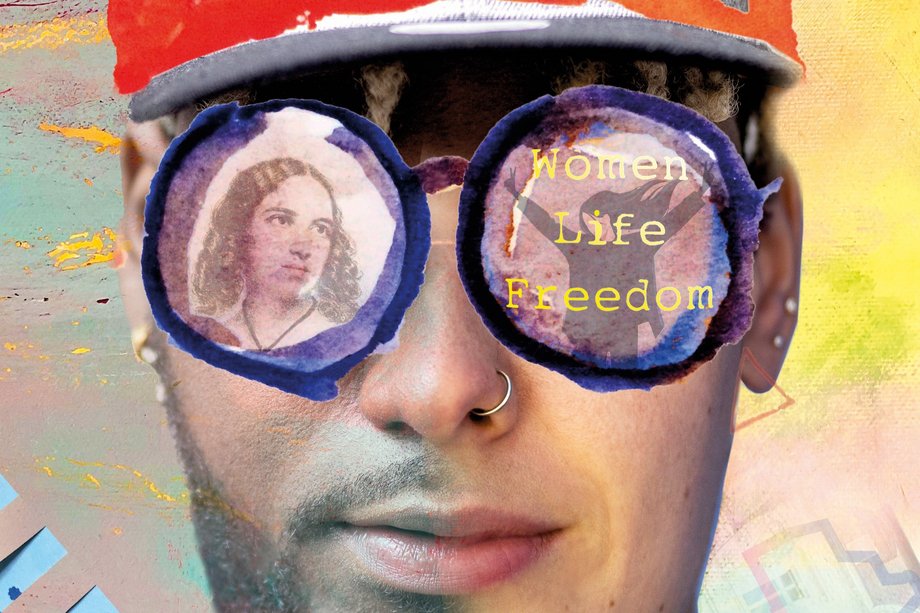

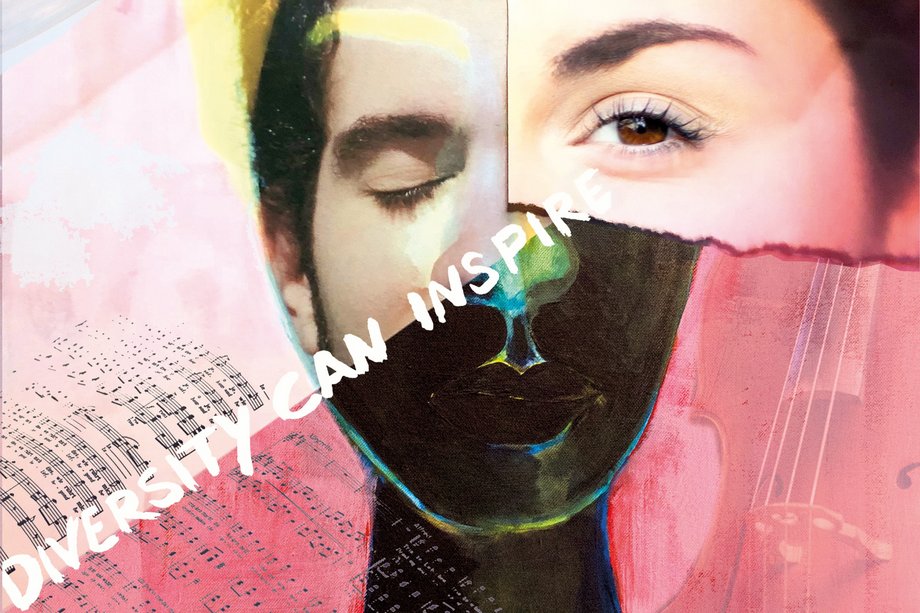
The HfMT Hamburg is an arts university with a strong international focus. Students, faculty, and staff come from over 60 countries and speak a corresponding number of different languages. They experience their daily lives in Hamburg and at the university in different ways, as this diversity extends beyond cultural, socioeconomic, and religious backgrounds to include individual identities and ways of life. They may identify as women or men within the traditional gender framework or exist beyond binary categories. They may live in heterosexual or same-sex relationships or have different skin colors and physical characteristics. Some must live with invisible chronic illnesses or physical or mental health challenges. Our goal is to enable all students, faculty, and staff at the HfMT to participate in university life free from discrimination.
Help and Advice
Do you need assistance? We’re here to help. The University of Music and Drama places great importance on ensuring that staff, students, and visitors treat one another fairly and respectfully and experience this treatment themselves. The nature of artistic and academic training—with its heavy emphasis on one-on-one and small-group instruction, personal dependence on instructors, high pressure to perform, and the need to give one’s all—requires us to treat one another with particular sensitivity. Please do not hesitate to contact us if you need help.
Diversity Can Inspire – HfMT Against Discrimination
For an arts and sciences university, diversity is not a marginal issue but an essential characteristic—it reflects the social reality in which universities operate today. It can be both a source of inspiration and a challenge.
Based on its guiding principle of “Artistic Excellence with Social Responsibility,” the HfMT derives its mission to continuously and critically reflect on its own structures and processes in the context of a changing, diverse society. For the university, therefore, diversity management means more than simply dealing with differences: it is about opening up access, making existing social barriers more permeable, and establishing a culture in which artistic and academic potential can flourish free from discrimination.
To give this aspiration a structural framework, the Diversity Steering Group—appointed by the University Senate—was established in 2018 —a working group in which all status groups at the HfMT collaborate, ranging from the deans’ offices to the expanded executive board, the equal opportunity officers, and the administration, all the way to the students.
To determine the current state of diversity at the HfMT, the Diversity Steering Group first developed a diversity survey specifically tailored to the unique characteristics of the HfMT as an arts university.
This text is based on surveys conducted among students (2019) and staff (2021).
The survey results were processed in several evaluation workshops and analyzed in specialized working groups. In addition to the graphical presentation of the quantitative results, the open-ended responses were categorized according to qualitative content analysis, and five overarching cluster themes were subsequently identified as areas for action:
Respect, Transparency, Access, Work-Life Balance, and Reflection. Based on the survey results, the Diversity Management Concept (DMK) , which encompasses ten aspects of the institution’s self-image and more than 100 measures. One aspect is the development of an anti-discrimination strategy. The introduction of the Diversity Management Concept was more than just the introduction of a strategic document. It was an expression of an institutional learning process that began with a fundamental question: As a state-funded arts college, do we truly reflect the full diversity of urban and national society?
The Diversity Management Concept is a dynamic framework that is continuously reviewed, evaluated, and refined. It aims to close diversity gaps and to recognize existing diversity as the creative potential of an arts and research university, to incorporate it into the context of teaching, and to treat the diversity already present in everyday university life with appreciation.
A University Committed to Gender Equality
“Equality” is a term that seems outdated and cumbersome. In terms of its meaning, however, it denotes a high societal ideal that is far from being ful
. Equality derives its relevance from the recognition that individual life circumstances and socially entrenched patterns of perception structurally hinder professional development, particularly for women*. Equality is therefore a task for society as a whole: through its approaches and measures, it helps to enable all members of society—regardless of gender, origin, or ethnicity—to lead an emancipated and equitable professional life.
The HfMT Hamburg pursues an approach that goes far beyond immediate higher education policy goals. It aims to advance gender equality in the fields of Music and Drama not only quantitatively but also qualitatively and sustainably. Artistic practice, scholarly reflection, and higher education policy aspects should go hand in hand to productively address societal notions of gender from a historical and systematic perspective and to bring about systemic, sustainable change. This stems from the conviction that, for genuine cultural change to occur, a decisive commitment to gender equality, the further development of gender studies, and the integration of relevant findings into the academic disciplines are indispensable.
This is linked to the hope that faculty, staff, and graduates will have a forward-looking and effective impact far beyond the university: Over the long term, they will transform the audiences, staff, and programs of cultural institutions, as well as private relationships, family role models, and societal notions of gender. At best—
—gender equality will become an integral part of a diverse, open, and sustainable cultural
practice—in both professional and personal life.
The HfMT Hamburg has been included in the “Women Professors Program 2030” of the Federal-State Initiative for Gender Equality and Diversity in Science. The HfMT’s gender equality plan for parity at the HfMT has been awarded the distinction of “University with Strong Commitment to Equality.” This places it among the universities whose strategies and measures were particularly impressive in the nationwide competition.
Inclusion
The Hamburg University of Music and Drama aims to create an environment that is sensitive to issues of inclusion and to eliminate discrimination, particularly against people with disabilities or chronic illnesses. An important part of this commitment is the Inklusion@HfMT/ARTplus certificate program, carried out in close cooperation with EUCREA e.V. It is aimed at young people with a recognized severe disability who demonstrate artistic potential, high motivation, and clear prospects for development, but who have had little or no access to professional support to date.
Initiatives, Programs, and Partnerships
Opening Pathways to Music—for Everyone: The HfMT’s Center for Young Talent brings together programs for the early development of musical talent and, in collaboration with Hamburg’s music schools and partners, creates structured, flexible pathways that provide access to artistic education regardless of background. A particular focus is placed on inclusion: In cooperation with EUCREA e.V., the university offers ARTplus, a certificate program unique in Germany for young people with disabilities.
Further information on the Center for the Promotion of Young Talent
"Each One Teach One"
Embracing Diversity – Creating Opportunities – Taking Responsibility
In October 2025, the HfMT will become a sponsor for three general-education schools in Hamburg. As part of a three-year grant from the Culture and School Project Fund, studentsfrom the HfMT and high school students will come together in workshops, rehearsal visits, and joint artisticprojects. Further information on the HfMT’s school sponsorships
The Women Professors Program is an initiative of the federal and state governments designed to promote gender equality at universities. It aims to increase the proportion of women in top academic positions by providing financial support for the appointment of women to professorial positions. Through the Women Professors Program 2030, the HfMT was awarded the designation “University with Strong Commitment to Gender Equality,” which offers the opportunity to fund an additional position for a female scholar or artist, leading to a tenured professorship.
The Conference of Gender Equality Officers at the HfMT (KoGl) continuously supports projects that make a significant contribution to gender, gender equality, intersectionality, queerness, the balance between academic studies, paid work, and caregiving, and/or gender-related discrimination and power dynamics in the context of Music and Drama, research, teaching, or university culture.
The maximum funding amount is 500 euros for individuals and up to 800 euros for groups. Eligible expenses include, for example, materials, printing costs, equipment and room rentals, travel expenses, and honoraria.
Please send the following in a single PDF document to laura-louise.brunner@hfmt-hamburg.de:
- A project outline of no more than half a page, including a reference to the topics mentioned above,
- a cost and financing plan for the entire project, as well as
- the requested grant amount.
The KoGl will decide on the funding. There is no legal entitlement to funding.
If you have any questions, please contact
Laura Louise Brunner (she/her)
, Coordinator for Equality and Diversity Management
Harvestehuder Weg 12 / University Library Building, Ground Floor
Tel: +49 152 026 518 78
laura-louise.brunner@hfmt-hamburg.de
The Center for Gender & Diversity (ZGD) is a joint initiative of various universities and colleges in Hamburg (including the HfMT) and serves primarily to connect these institutions and their respective stakeholders working on diversity and equity. It supports research activities on gender and diversity, organizes conferences, workshops, and public events, and provides guidance on gender and diversity issues in research, teaching, and academic studies. In addition, the ZGD organizes the “Gender Competence” and “Intersectionality & Diversity” certificate programs for students at all member institutions.
Pro Exzellenzia is a Hamburg-based career and skills center founded on the initiative of the equal opportunity officers at Hamburg’s seven universities and the Free and Hanseatic City of Hamburg. Through various scholarships, coaching sessions, workshops, and networking opportunities, the project supports highly qualified women on their path to leadership positions.
The certificate program, which is part of Hamburg Innovation GmbH’s “Calls for Transfer” funding initiative, involves a collaboration between the HipHop Academy and the HfMT. The project focuses on the development of a jointly designed curriculum that combines artistic practice, education, and social participation.
For the HfMT, the project is a sign of institutional openness and is intended to foster new perspectives, spaces for aesthetic experience, and forms of mutual learning. Plans include introductory courses, an initial camp, and various workshops designed to foster exchange between the university and the hip-hop community. The project deliberately takes a practice- and results-oriented approach. The goal is to develop concrete formats and outcomes that make the concept of knowledge transfer visible and comprehensible.
The certificate program, carried out in close cooperation with EUCREA e.V., is aimed at young people with a recognized severe disability who demonstrate artistic potential, high motivation, and clear prospects for growth, and who have had little or no access to professional support to date.
Archive
Immerse yourself. Focus. Delve deeper. Under the motto “Diversity Can Inspire,” the HfMT organized the Diversity Study Weeks during the 2023–24 winter semester. Together, we celebrate diversity, because it is not just a buzzword, but the very heart of our collaboration and creative development at an arts and sciences university.
The“Diversity at German Universities”initiative aims to raise awareness of diversity and reduce discrimination. With funding from the Federal Ministry of Education and Research (BMBF), the German Rectors’ Conference (HRK) supports universities nationwide in further developing comprehensive diversity strategies. The project proposal submitted by the Hamburg University of Music and Drama was selected for funding to support our institutional diversity projects.
Important Documents
The HfMT Hamburg Diversity Management Concept originated within the university and was unanimously adopted by the Executive Board and the University Senate on May 8, 2024. In addition to an assessment of the current state of diversity and equity issues at the HfMT, it also presents a needs analysis and concrete measures for addressing existing diversity and promoting social and cultural openness, with a focus on diversity gaps.
The gender parity plan was developed as part of the Female Professors Program 2030 and was successfully adopted by the Federal-State Initiative for Gender Equality and Diversity in Science. In addition, the HfMT Hamburg was awarded the distinction of “University with a Strong Commitment to Gender Equality.” With the gender parity plan it submitted, it ranks among the universities whose strategies and measures were particularly impressive in the nationwide competition.
Gender Parity Plan
This Code of Conduct provides all members and affiliates of the HfMT with guidance on how to interact with one another. In addition to professional duties, it sets forth fundamental principles for trusting, fair, and respectful interaction.
On May 14, 2025, the Senate of the Hamburg University of Music and Drama unanimously adopted the anti-discrimination strategy at its meeting. No one should feel threatened at the university because of their identity.
Antidiskriminierungsstrategie.pdf
The HfMT Hamburg places great emphasis on respectful and fair treatment of one another and does not tolerate any form of discrimination, racism, unfair treatment, or violence. This policy outlines options for action, such as the complaint procedure, counseling services, and reporting channels for those affected. Particularly in artistic education, which is characterized by close contact between faculty and students, a sensitive and mindful approach is essential.
The unique characteristics of an artistic education—with its heavy emphasis on individual and small-group instruction, the personal dependence on the teacher, high pressure to perform, and the need to give one’s all—require a particularly sensitive approach to one another and constant reflection on one’s own actions.
Through the Guidelines for the Advancement of Women, adopted in 2005, the HfMT aims to ensure equal participation of women at the university and to eliminate discrimination.
This document provides information on applying for accommodations for students or prospective students with a disability (visible or invisible) or a chronic illness.
This guide addresses gender-sensitive and gender-inclusive language. In addition to recommended phrasing, you will also find contact information for people to reach out to if you have further questions.
This guide addresses the use of gender-sensitive and inclusive language. In addition to recommended phrasing, it also provides contact information for further questions.
Acceptance of diverse gender identities involves not only social interactions but also formal procedures. Here, students and employees of the university can find information on changing their name and gender designation.
Information on Changing Your Name and Gender Designation (pdf)
The position paper issued by the Conference of Rectors of Music Colleges on May 9, 2024, presents a Germany-wide statement by the rectors of all music colleges on how to address abuse of power and sets forth specific recommendations for preventing abuse of power in the various departments of a music college.
RKM Position Paper (pdf)
RKM Recommendations for Action (pdf)
The recommendations for action on addressing sexual discrimination and violence at art and music colleges, dated April 18, 2023, aim to better protect students and staff. They include ten specific measures to prevent discrimination and provide support to those affected.
At the following link, you’ll find a dictionary (Diversity Arts Culture Berlin) that explains basic terms in the context of diversity and aims to provide guidance. Terms from the cultural sector are also explained.